
Table of Contents
Quick answer: For a wholesale dog water bottle program, compare usable water volume, dispensing mechanism and drinking-bowl design as one system. A larger bottle is not automatically the better retail choice: it also changes filled weight, shelf space and how easily a customer can carry and clean the product. Start with the customer’s use case, then request the finished SKU specifications and test the mechanism on a sample. Do not count a food-storage compartment as water capacity.
Dokipetty’s dog water bottle range includes button-operated, twist-operated and multi-compartment designs. Its wholesale sourcing guide covers broader supplier selection. This article addresses a narrower question: Which bottle formats should a retailer shortlist, and what must be checked before a bulk order?
Start with the Retail Use Case
Describe where the shopper will use the bottle before choosing a nominal capacity.
| Shopper task | Questions for the buyer’s brief |
|---|---|
| Short walks and daily errands | Can a customer operate the bottle with one hand? How much does the filled unit weigh? Where is the used drinking surface kept between stops? |
| Longer outings | How much usable water does the finished bottle carry? Can the owner refill it easily, and will it fit the intended bag or holder? |
| Travel and mixed-use kits | Are the bowl, water reservoir and any food or waste-bag compartment clearly separated? Can each part be cleaned? |
| A premium or giftable range | Does the mechanism feel consistent across samples? Do the finish, logo and package suit the target shelf presentation? |
These are merchandising questions, not a formula for how much water an individual dog needs. Check a product page’s capacity label against the actual fill line and finished configuration.
Compare Current Dokipetty Bottle Formats
The examples below use features stated on the linked product pages. “Not stated” means the sampled page did not give a numeric specification, not that the product lacks one. Confirm the latest specification and availability before putting values in a purchase order.
| Publicly listed model | Capacity and mechanism stated on its page | What a bulk buyer should verify |
|---|---|---|
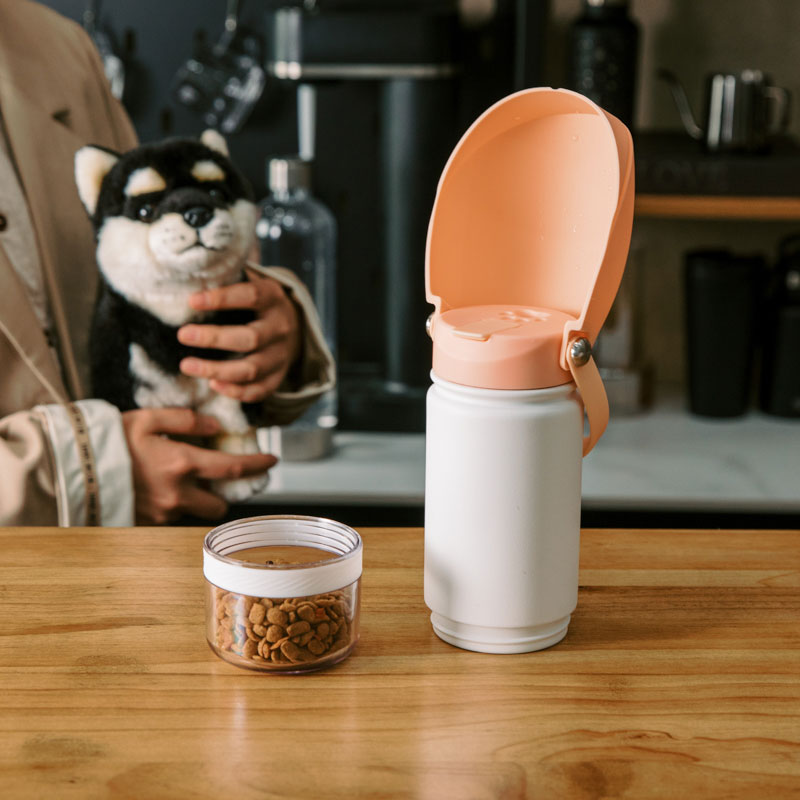
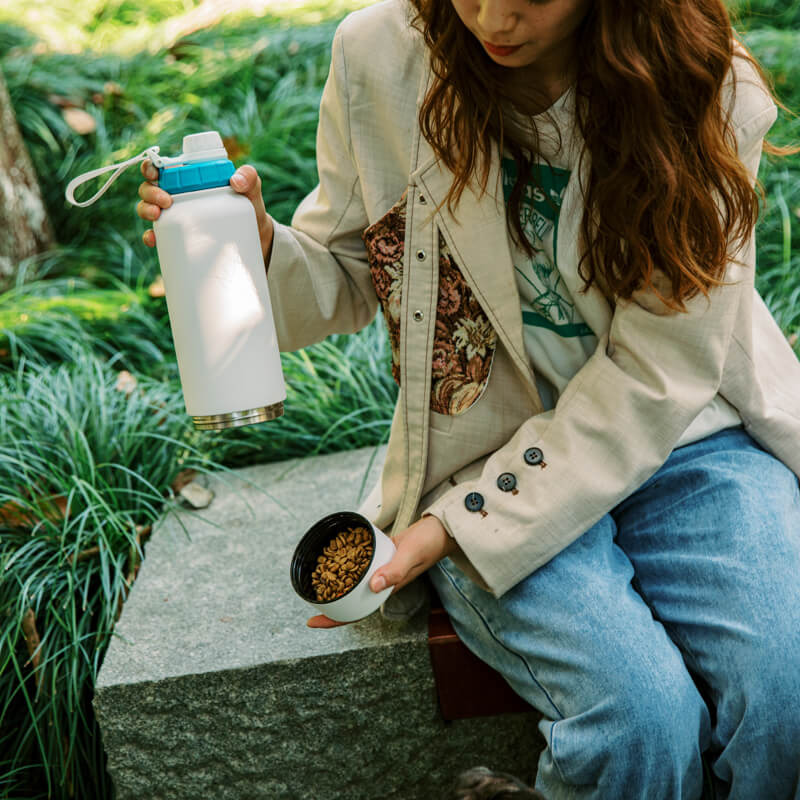
| Stainless Steel Portable Dog Water Bottle 22011B | The page describes a 30 oz bottle and a separate 8 oz removable storage bottom for treats. Its dispensing method is not specified in the sampled feature text. | Confirm usable water volume, whether the storage bottom is included, the dispensing method and filled weight. Do not add the 8 oz storage volume to water capacity. |
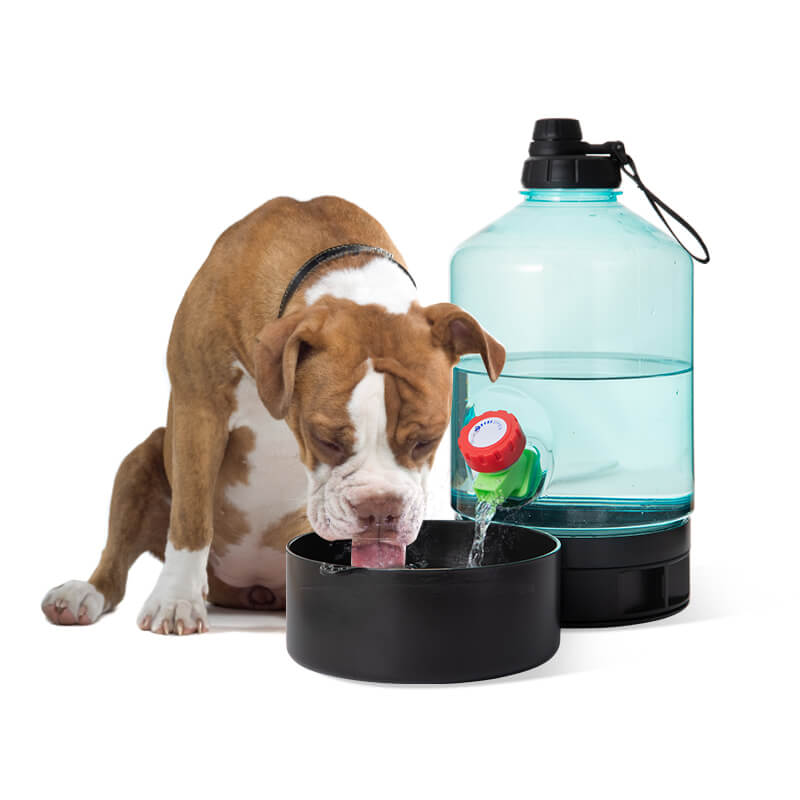
| Portable Dog Water Bottle with Built-in Bowl | The page describes one-press dispensing, a lock button and an integrated curved bowl. Numeric water capacity is not stated in the sampled feature text. | Measure the bowl’s usable drinking space, test the lock in the intended carrying position, and confirm reservoir volume and cleaning steps. |
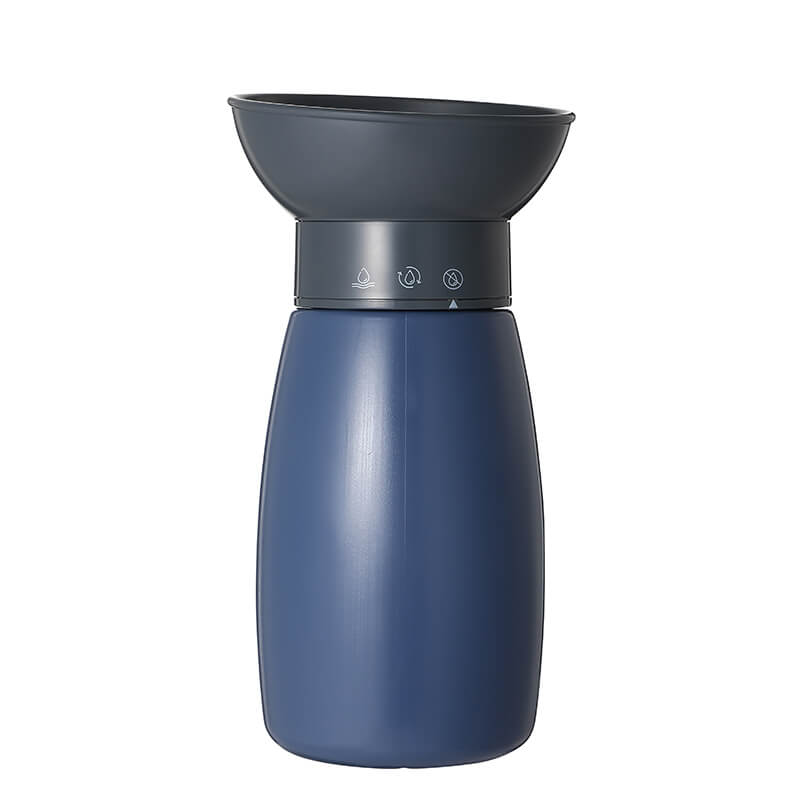
| Smart Rotating Dog Water Bottle | The page describes a twist-to-open collar and integrated wide-mouth bowl. Numeric capacity is not stated in the sampled feature text. | Check flow control, closure feel, accessible cleaning surfaces and the offered version’s volume. |
| Stainless Steel Portable Dog Water Bottle | The page describes one-button water control, return of unused water, a lock and a trough-style bowl. Numeric capacity is not stated in the sampled feature text. | Test dispensing and return flow under agreed conditions, confirm cleaning, and check the assembled lid and seal for leakage. |
| Segmented Design Dog and Human Water Bottle 01511A | The page describes a 32 oz wide-mouth bottle and an 8 oz removable storage bottom. The sampled text does not specify a dog-facing dispensing mechanism. | Confirm how the finished design serves the pet, whether 32 oz is usable water volume, and how the components are packed and cleaned. |
The consumer guide to bottles with built-in bowls discusses squeeze-style bottles as a general category. The sampled Dokipetty product pages above do not establish a current squeeze-operated SKU. If your assortment calls for one, ask whether a specific squeeze model is available and test that finished sample.
Compare Capacity as Usable Volume, Not Just a Number in the Title
For each shortlisted SKU, request nominal capacity, measured usable fill volume, the fill-line definition, empty and filled weights, overall dimensions and carton dimensions. Record which lid and bowl configuration was used for the measurements. A bottle with a food-storage base needs separate figures for water and dry storage.
Then review four trade-offs:
- Portability: Does the filled bottle fit the shopper’s bag, stroller or vehicle holder? Ask for dimensions instead of relying on “portable” in the product name.
- Water access: Can the intended user dispense a controlled amount without removing several parts? Is the drinking surface suitable for the target customer?
- Cleaning: Can the customer reach the water path, bowl, valve and gasket? Request care instructions by component.
- Presentation: Does the format suit the shelf space and shipping volume of your channel?
If your range serves several types of outings, compare more than one finished size. Avoid assigning a universal “best capacity” to every dog or market without evidence about your shoppers.
Dispensing Systems Create Different Buying and QC Questions
Button-operated designs can offer one-hand dispensing. Ask whether the button is protected from accidental presses, whether there is a separate lock, and how the valve and gasket are cleaned. Test the finished lid, not just the bottle body.
Twist-operated designs control flow through a rotating collar. Check whether the open and closed positions are clear, whether the collar operates consistently after repeated use, and whether residual water can be cleaned from the bowl and flow path.
Squeeze-operated designs, if offered for the project, need their own sample review. Check the force needed to dispense, the material’s recovery after squeezing, the closure, and cleaning of the drinking tray. Do not apply the result of a button-operated model to a squeeze bottle.
For any design that returns unused water to the reservoir, ask how the flow path is cleaned and what the instructions say about handling water left in the bowl. Treat return flow as a feature to validate, not proof of a hygiene or leak-resistance claim.
Dokipetty’s leak-proof testing checklist helps buyers agree on fill level, orientation, temperature, dispensing cycles and a pass/fail rule. Use it when the shortlist moves to sample approval.
Build a Shortlist That Can Become An RFQ
Ask the supplier to return one line per offered SKU with these fields:
| Field | What to request |
|---|---|
| Product identity | Model/SKU, revision, available colors, photos and sample availability. |
| Water capacity | Nominal and usable volume, with the fill-line method. List food or accessory storage separately. |
| Format | Dispensing mechanism, lock, bowl or trough, lid, gasket and any return-flow function. |
| Materials and care | Materials by component, cleaning instructions and documents supporting market-specific claims. |
| Size and pack-out | Empty and filled weight, dimensions, retail-pack dimensions and units per shipping carton. |
| Customization | Logo, color and packaging options for that SKU; tooling or sample-approval requirements. |
| Quality plan | Sample tests, production checks and pre-shipment criteria agreed for the order. |
| Commercial terms | Quantity bands, applicable MOQ conditions, sample and production timing, and destination. |
Compare responses on the same basis. If one product sheet gives only nominal capacity and another gives usable fill volume, request the missing figure before ranking the products. Keep the approved sample and specification so the shipment can be checked against the same design.
Choose the Next Step for Your Product Range
Use the Dokipetty dog water bottle category to identify current designs. Then send your target channel, use case, preferred dispensing type and required specifications through the customization page. Ask for current SKU sheets and samples for the models you want to compare.